
The jewelry industry in India has a rich cultural heritage that blends centuries-old traditions with contemporary styles. Jewelry is not merely a fashion accessory in India; it’s an embodiment of personal expression, wealth, social status, and tradition. In recent years, the evolution of fashion trends has seen the emergence of modern designs that combine elegance with functionality. The Indian jewelry market is thriving, driven by both demand for traditional pieces and contemporary adornments.
Consumer Insights on Jewelry in India
The jewelry market in India is diverse, driven by varying tastes, preferences, and cultural factors. A large segment of consumers continues to favor traditional jewelry designs, particularly during festive seasons, weddings, and special occasions. On the other hand, an emerging trend is the growing demand for lightweight, customizable, and modern jewelry pieces for daily wear.
Consumer Behaviors in the Indian Jewelry Market
- Cultural Significance: In India, jewelry holds deep cultural value. Many consumers still prefer investing in traditional gold, silver, and diamond jewelry for significant life events like weddings, birthdays, and festivals.
- Trend Awareness: Younger generations, particularly millennials and Gen Z, are increasingly inclined toward trendy and minimalist jewelry. This demographic is willing to experiment with unconventional designs, materials, and styles.
- Personalization: There is a rising demand for personalized jewelry. Consumers prefer unique designs that reflect their individuality or hold sentimental value, whether it’s an engraved necklace or a custom-designed ring.
- E-commerce Shift: The online shopping trend in India is transforming the jewelry sector. Consumers are now more inclined to browse and purchase jewelry online, driven by the convenience, variety, and competitive pricing available through digital platforms.
Why Choose Jewelry?
Jewelry is not just about adding sparkle to one’s appearance; it serves as an investment, a status symbol, and often carries sentimental value. Here’s why choosing jewelry as a fashion accessory or gift is always a great option:
- Timeless Appeal: Jewelry is a timeless accessory that complements every occasion, from weddings and festivals to casual outings. Pieces like necklaces, bracelets, earrings, and rings can elevate any outfit, making them a must-have in every fashion-forward individual’s collection.
- Investment Value: Gold, diamonds, and precious stones have long been seen as valuable assets. Indian consumers traditionally invest in jewelry as a way to preserve and grow wealth, especially in uncertain economic times.
- Emotional Connection: Jewelry is often passed down through generations, making it an heirloom. It carries memories and emotions, making it more than just a material object.
- Expression of Personality: Jewelry allows individuals to showcase their personality and style. Whether someone prefers bold statement pieces or subtle designs, jewelry provides a way to express one’s individuality.
Market Potential for Jewelry in India
India’s jewelry market is one of the largest in the world, with an estimated market size of around INR 5 lakh crore in 2024. The market potential continues to grow, fueled by:
- Expanding Middle-Class Population: India’s middle class is growing rapidly, leading to a higher demand for both affordable and luxury jewelry.
- Changing Fashion Trends: Younger consumers are driving the demand for modern and innovative jewelry designs. They seek versatility, value for money, and customization options.
- Global Expansion: India’s jewelry brands are gaining global recognition. Indian jewelry designers and manufacturers are increasingly catering to international markets, especially in regions like the US, UK, and the Middle East.
- Digital Transformation: The rise of e-commerce platforms like Amazon, Flipkart, and niche jewelry websites has made it easier for consumers to purchase jewelry from the comfort of their homes. Virtual try-ons, AI-driven design recommendations, and online customization are becoming increasingly popular.
Marketing Strategies for the Jewelry Industry
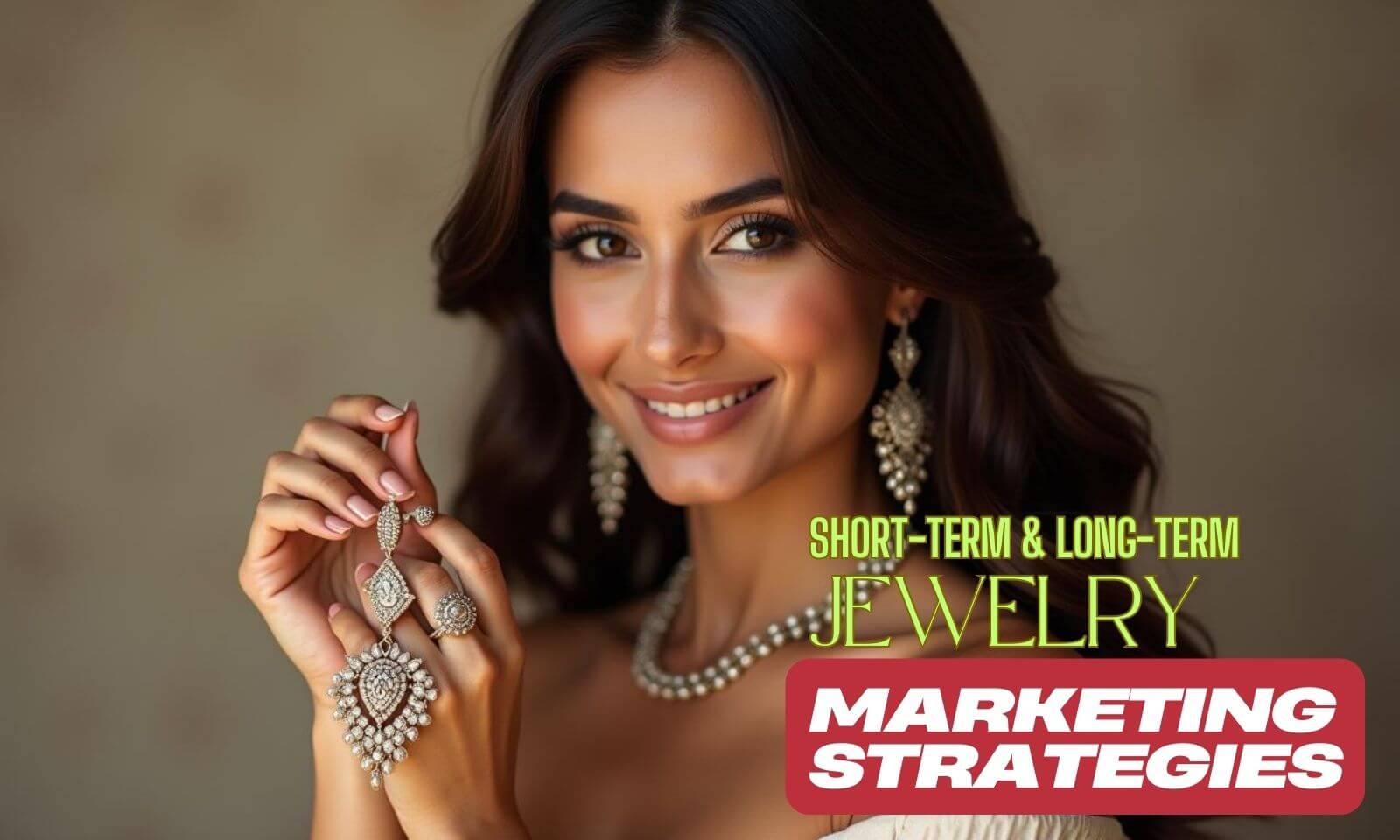
To cater to the ever-evolving demands of Indian consumers, jewelry brands need to adopt a mix of both short-term and long-term marketing strategies. Here’s how businesses can position themselves for success:
Short-Term Marketing Strategies:
- Seasonal Campaigns and Offers: Given the cultural significance of festivals like Diwali, Dussehra, and weddings in India, brands should launch seasonal campaigns, offering discounts, festive collections, and exclusive designs tailored to these occasions. Flash sales, limited-time offers, and personalized gifting options can also generate immediate interest and boost sales.
- Influencer Collaborations: Partnering with fashion influencers, celebrities, and stylists on social media platforms like Instagram, YouTube, and TikTok can create buzz for new collections and drive quick sales. These collaborations can help build brand credibility and expand reach.
- Social Media Advertising: Run targeted ads on social media platforms to capture the attention of younger consumers. Use high-quality images, interactive polls, contests, and stories to engage audiences.
- Online Reviews and Testimonials: Encouraging satisfied customers to leave positive reviews online can establish trust and encourage potential buyers to make a purchase.
Long-Term Marketing Strategies:
- Brand Storytelling: Developing a strong brand story that resonates with consumers is essential for long-term brand loyalty. Whether it’s about sustainability, craftsmanship, or cultural heritage, telling a compelling story about the brand can make it stand out.
- Sustainability and Ethical Practices: Today’s consumers are more socially conscious. Jewelry brands that promote sustainable sourcing of materials, ethical manufacturing practices, and eco-friendly packaging will likely attract an environmentally aware customer base.
- Loyalty Programs: Implement loyalty programs that reward repeat customers with discounts, exclusive previews of new collections, or free customization options. These programs will encourage customer retention and increase long-term sales.
- Global Expansion: Investing in international markets, particularly where there’s a significant Indian diaspora, will help jewelry brands tap into new revenue streams. Collaborating with international retailers and online platforms can help expand global reach.
Conclusion: The jewelry industry in India is one of the most promising sectors within the fashion and apparel market. With a mix of traditional allure and modern innovation, the sector is set to evolve and thrive. By understanding consumer behaviors, tapping into the digital revolution, and adopting effective marketing strategies, jewelry brands can unlock immense potential in both the domestic and international markets. The key is to offer timeless, customizable, and ethically sourced jewelry that resonates with today’s socially aware and fashion-forward consumers.
FAQs based on “Jewelry Industry in India: A Blend of Tradition and Modern Trends”:
- Why is jewelry so important in India?
Jewelry in India holds deep cultural, emotional, and social significance. It symbolizes wealth, tradition, and status, and is often passed down through generations as an heirloom.
- What types of jewelry are most popular in India?
Traditional jewelry like gold, silver, and diamond pieces are highly popular, especially for weddings and festivals. However, modern and lightweight jewelry designs are gaining traction for daily wear.
- How has the jewelry market in India evolved?
The Indian jewelry market has seen a blend of traditional and modern designs. Younger generations are increasingly inclined toward minimalist, trendy, and customizable jewelry, driving the market’s evolution.
- Why do Indians invest in jewelry?
Jewelry, particularly gold and diamonds, is considered a safe investment. It preserves wealth and can be used as a hedge against inflation, making it a long-term asset.
- What is the demand for personalized jewelry in India?
There is a growing demand for personalized jewelry in India, with consumers preferring custom designs, engravings, and unique pieces that reflect personal style or sentimental value.
- Why is jewelry a good gift choice in India?
Jewelry holds emotional value and is often given as a gift during weddings, festivals, and special occasions. It symbolizes love, respect, and lasting memories, making it an ideal gift choice.
- How has e-commerce impacted the jewelry market in India?
The rise of e-commerce has revolutionized the jewelry market, making it easier for consumers to purchase jewelry online, explore a wide variety, and access better pricing and convenience.
- What are the key drivers of the jewelry market’s growth in India?
The expansion of the middle class, changing fashion trends, rising disposable income, growing consumer awareness, and digital transformation are driving the growth of India’s jewelry market.
- What types of jewelry are popular among younger consumers?
Younger consumers are gravitating toward trendy, minimalist, and lightweight jewelry for everyday wear. They are also drawn to customizable and statement pieces that reflect their individual style.
- What is the market potential for jewelry in India?
India’s jewelry market is one of the largest globally, with a projected market size of around INR 5 lakh crore by 2024. The demand is fueled by growing disposable incomes, evolving fashion trends, and a penchant for investment in precious metals.
- How does jewelry reflect Indian culture?
Jewelry in India is deeply intertwined with cultural and traditional practices. Pieces like bridal sets, religious symbols, and ethnic designs hold cultural significance and are an integral part of Indian weddings and festivals.
- What trends are emerging in the Indian jewelry market?
Trends include lightweight jewelry, modern designs, customization, and a rise in sustainable and ethical jewelry, with consumers leaning toward eco-friendly materials and ethical manufacturing practices.
- How are Indian jewelry brands expanding internationally?
Indian jewelry brands are gaining global recognition and expanding into international markets, especially in regions with a significant Indian diaspora, such as the US, UK, and the Middle East.
- What role does sustainability play in the Indian jewelry market?
Sustainability is becoming increasingly important, with brands adopting ethical sourcing, eco-friendly packaging, and responsible manufacturing practices to appeal to environmentally conscious consumers.
- What marketing strategies work best for jewelry brands in India?
Short-term strategies include influencer collaborations, seasonal offers, and targeted social media ads. Long-term strategies focus on brand storytelling, customer loyalty programs, and global expansion.
- How can jewelry brands appeal to younger consumers?
Brands can attract younger consumers by offering trendy, customizable designs, using social media platforms for engagement, and providing affordable yet stylish options that align with current fashion trends.
- What is the importance of jewelry during Indian festivals?
Jewelry plays a central role in Indian festivals, where people often buy new pieces as part of cultural celebrations. Festive collections and exclusive designs can drive sales during peak seasons like Diwali and Dussehra.
- How do Indian consumers perceive luxury jewelry?
Luxury jewelry in India is seen as a status symbol. Many consumers are willing to invest in high-end brands that offer quality, exclusivity, and craftsmanship, especially during significant life events like weddings.
- What are some challenges in the Indian jewelry market?
Challenges include competition from local and international brands, rising gold prices, and the need for continuous innovation to meet the evolving tastes of younger consumers.
- What does the future hold for the jewelry industry in India?
The future of India’s jewelry industry looks promising, with growing demand for both traditional and modern pieces. E-commerce, sustainability, and customization are expected to be key drivers of growth, as the market adapts to the preferences of a tech-savvy, fashion-forward consumer base.
Disclaimer: The views and opinions expressed in this article are solely those of the author and do not necessarily reflect the official policies or positions of any organization or entity. The information provided is for general informational purposes only and should not be considered professional advice. While every effort has been made to ensure accuracy, the author and publisher assume no responsibility for any errors or omissions. Readers are encouraged to conduct their research and seek professional guidance before making any business or financial decisions.
Use of AI: The photos, content, and some reports in this newsletter and website https://www.vijaymalhotra.in/ are AI-generated using Artificial Intelligence tools.